





NCTC’s Joint Counterterrorism Assessment Team (JCAT) helps improve public safety by sharing counterterrorism information with federal, state, local, tribal, territorial, and private sector partners. JCAT works in three main areas: producing intelligence reports that reflect partner needs, building relationships and raising awareness through outreach and education, and supporting training and exercises to strengthen counterterrorism efforts.
Lines of effort
We work to review counterterrorism information to develop intelligence products on topics intended to address our partners’ intelligence needs and requirements
We build and strengthen our partnerships by promoting awareness and understanding of partner capabilities and resources, improve information sharing, and recruit JCAT fellows
We plan, deliver, and evaluate counterterrorism exercises and facilitate training opportunities for our partners
First Responder’s Toolbox
The First Responder’s Toolbox is an unclassified reference guide designed to support coordination between federal, state, local, tribal, territorial, and private sector partners in efforts to deter, prevent, disrupt, and respond to terrorist threats.
These products are developed by JCAT fellows who work side-by-side with intelligence analysts from NCTC, DHS, and FBI.
Threat Identification
FEATURED
FEATURED
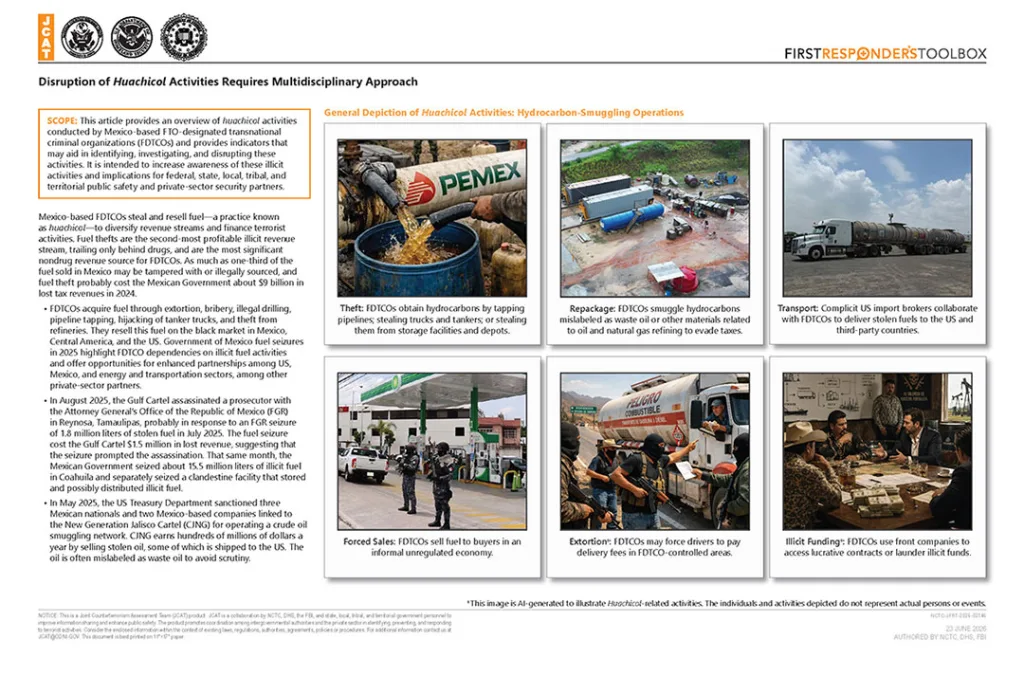
Provides an overview of huachicol activities conducted by Mexico-based FTO-designated transnational criminal organizations (FDTCOs) and provides indicators that may aid in identifying, investigating, and disrupting these activities.
(external link, opens in new tab)Disruption of Huachicol Activities Requires Multidisciplinary Approach(external link, opens in new tab)
Terrorist Use of AI to Facilitate Fraud Requires Adaptability(external link, opens in new tab)
Safeguarding Rail Infrastructure During Mass Gatherings(external link, opens in new tab)
Enhancing Security for High Profile Figures at Public Gatherings(external link, opens in new tab)
Natural Resources Provide Illicit Profits for Terrorists
Evaluating and Responding to Violent Extremist Hoax Threats
Potential Malign Uses of Extended-Reality Technologies
Enhancing Bystander Reporting to Prevent Terrorism
Emerging Technologies and Possible Malign Uses by Terrorists
Violent Extremists’ Use of Generative Artificial Intelligence
Identifying Terrorist Trade-Based Money Laundering
Understanding and Mitigating Violent Extremism Among Offenders
Threat Assessment and Threat Management (TATM)
Responses to Overseas Conflicts May Impact Public Safety Agencies in the Homeland
Considerations for Responding to an Improvised Explosive Device (IED) Attack
Mixing Ideologies Requires Multipronged Terrorism Prevention Efforts
Threat Assessment and Threat Management Series
Identifying and Preventing Terrorist and Other Illicit Financing
Emerging Technologies May Heighten Terrorist Threats
Reporting Suspicious Activity – Critical for Terrorism Prevention
Use of Memes by Violent Extremists
Reentry Service Partnerships Important in Terrorism Prevention
Terrorism Prevention – Addressing Early Risk Factors to Build Resilience Against Violent Extremism
Mitigating the Threat of Terrorist-Initiated Arson Attacks on Wildland-Urban Interface Areas
Awareness of Illicit Cryptomining-Related Activities May Improve Detection
Identifying and Preventing Illicit Use of Cryptocurrency by Terrorists
Awareness of Violent Extremist Tactics to Defeat Physical Security Can Improve Response
Intervention Options for Minors Vulnerable to Violent Extremism Activity
Possible Indicators of Criminal Offenders Mobilizing to Violent Extremist
Vehicle-Borne Attacks: Tactics and Mitigation
Programmable Microcontrollers: Potential for Illicit Use
Mental Health Considerations in Threat Management of Terrorism Investigative Subjects
Chemical and Biological Threats to Food Retailers
Terrorist Messaging Urges Use of Edged-Weapons
Natural Gas and Propane Terrorist Tactics
Unmanned Aircraft System (UAS): Recognizing Malicious Modification
Complex Operating Environment – Oil and Natural Gas Refineries
ISIS Continues to Encourage Arson Attacks
Chemical and Biological Threats to Food Retailers
Knockdown Gases: Dangers, Indicators, and Response
Persistent Threat of Terrorist Ambush Attacks on First Responders
Recognizing Possible Terrorist 911 Calls: Indicators and Considerations for an Effective Response
Female Violent Extremists: Implications for Public Safety
Best Practices for Vehicle Screening Against Terrorist Tactics – Print
Complex Operating Environment – Educational Facilities: Primary and Secondary Schools
Complex Operating Environment – Educational Facilities: Post-Secondary Institutions
Multilayered Approach Can Help Mitigate Challenges Posed by Common HME Precursors and IED Components
Bus Attacks Highlight Potential Tactics and Mitigation Efforts
Postal and Shipping: Identification and Mitigation of Suspicious Mail and Packages
Postal and Shipping: Identification and Mitigation of Suspicious Mail and Packages – Response Card
Terrorism Planning and Incident Response Considerations for Bridges
Vehicle Borne Improvised Explosive Device (VBIED): Preparedness, Recognition, and Response – Print
ACID ATTACKS: Potential Opportunistic Threat and Rapid Treatment Awareness
Targets
FEATURED
FEATURED
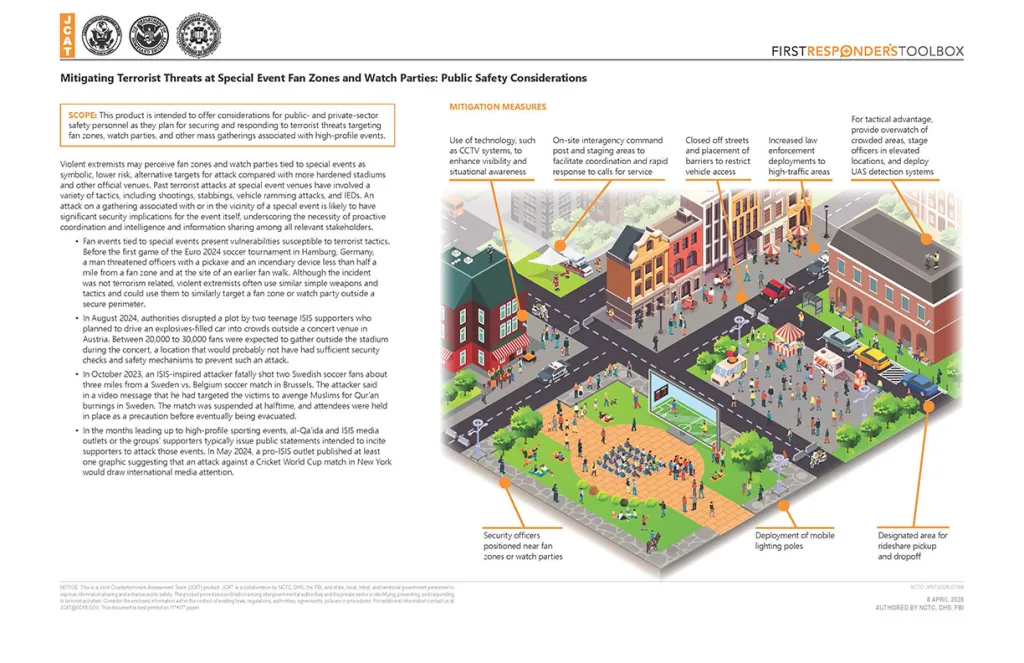
Mitigating Terrorist Threats at Special Event Fan Zones and Watch Parties: Public Safety Considerations(external link, opens in new tab)
Offers considerations for securing and responding to terrorist threats targeting fan zones, watch parties, and other mass gatherings associated with high-profile events.
Large Public Gatherings Attractive Targets for Violent Extremists
Terrorist Exploitation of Online Gaming Platforms
Protection Considerations for Violent Extremist Threats to Public Officials
Counterterrorism Considerations for Waterfront Locations
Personal Security of First Responders in the Digital Age
National Historical Landmarks and Monuments
Violent Extremists and Terrorists Exploit Civil Unrest and Public Assemblies in the United States
Vehicle Rental/Leasing Industry Partnerships: A Force Multiplier
Involvement of Minors in Terrorist Plots and Attacks Likely to Endure
Partnerships
FEATURED
FEATURED
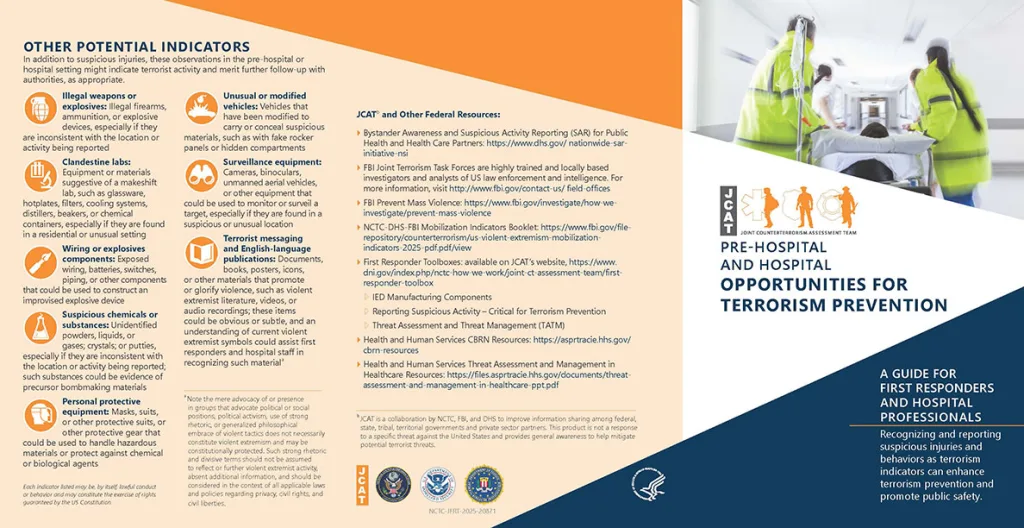
Pre-Hospital and Hospital Opportunities for Terrorism Prevention(external link, opens in new tab)
Recognizing and reporting suspicious injuries and behaviors as terrorism indicators can enhance terrorism prevention and promote public safety.
Pre-Hospital and Hospital Opportunities for Terrorism Prevention(external link, opens in new tab)
Third-Party Security Critical to Safeguarding Public Gatherings from Terrorist Threats
Complex Operating Environment – Ferry Systems
Threats Against Houses of Worship Highlight the Importance of Religious Community Outreach (2022)
Complex Operating Environment – Special and Other Significant Events
Threat of Terrorism and Hate Crimes Against Jewish Communities in the United States
Complex Operating Environment: Oil and Gas Pipelines
Complex Operating Environment – High-Rise Hotel
Hospitality Industry: Enhanced Suspicious Activity Awareness Assists in Terrorism Prevention
Complex Operating Environment – Stadiums and Arenas
Complex Operating Environment – Shopping Malls
Complex Operating Environment – Electric Grid
Complex Operating Environment – Healthcare Facilities
Complex Operating Environment – Airports
Taxi Cab and Ride-sharing Service Partnerships – Potential Public Safety Force Multiplier
Community Impact
Since 2007, the JCAT has hosted over 80 fellows from 26 states and the District of Columbia. The knowledge and experience gained during their time with JCAT gives them an enhanced understanding of the federal counterterrorism landscape. This unique understanding of the federal counterterrorism enterprise, coupled with their field experience makes JCAT alumni valuable assets for state and local counterterrorism efforts as well as in support of ongoing federal counterterrorism production, outreach, and training. In many ways, JCAT alumni remain integrated into JCAT’s activities long after their departure.
Explore the interactive map to the right.
Explore the interactive map below.
Fellowship Program
JCAT’s Federal Fellowship Program integrates state, local, tribal, and territorial first responders and public safety professionals into the Intelligence Community.
JCAT fellows work alongside IC personnel from NCTC, DHS, and FBI, and lend their subject matter expertise and field perspective to JCAT production, outreach and education, and support of the public safety community.
The JCAT fellowship program is open to current employees from state, local, tribal, or territorial agencies. Candidates should possess a working knowledge of the terrorism and homeland security information needs of SLTT partners and have the ability to obtain a Top Secret clearance. The fellowship program requires a six month to one year commitment in McLean, Virginia, if selected.
Click here(external link, opens in new tab) to learn more and apply.
Guides and Resources
First responders can access unclassified CT information through U.S. government internet portals that contain intelligence products designed to enhance awareness of terrorism threats, tactics, techniques and procedures
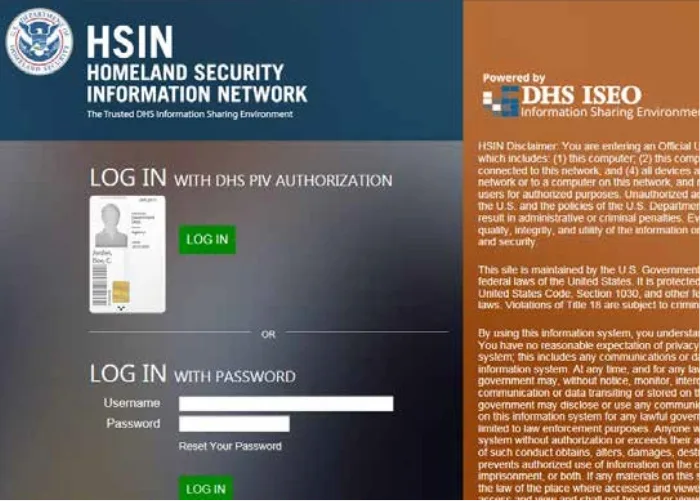
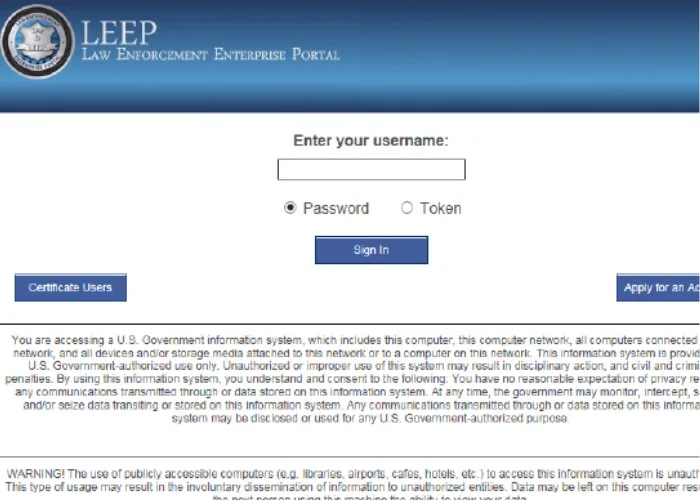
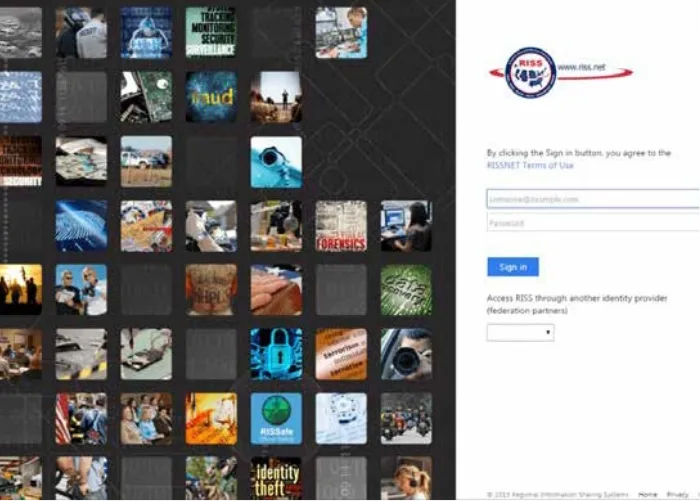
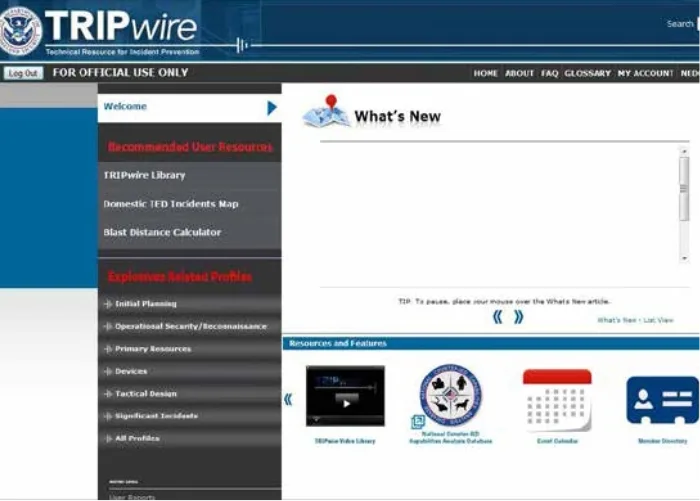
HSIN, LEEP, RISS and TRIPWIRE
The Homeland Security Information Network (HSIN), Law Enforcement Enterprise Portal (LEEP), Regional Information Sharing Systems (RISS) Officer Safety Website, and Technical Resource for Incident Prevention (TRIPWIRE) are secure, web-based platforms that support information sharing, collaboration, and situational awareness among homeland security, law enforcement, and intelligence partners. These systems provide access to investigative tools, analytical resources, officer safety updates, and threat-related information—including JCAT products on HSIN—enhancing coordination, case development, and preparedness across agencies.
Counterterrorism Guide for Public Safety Personnel
Public safety personnel are well positioned to identify suspicious activity related to terrorism. In some cases, first responders who have reported this information have helped to disrupt terrorist plans or attacks in the United States.
The Counterterrorism Guide for Public Safety Personnel is designed to assist first responders in recognizing and reporting suspicious activity linked to terrorism, spotting indicators of mobilization to violence, and responding to and mitigating terrorist attacks.
Intelligence Guide for First Responders
The Intelligence Guide for First Responders improves information sharing among state, local, tribal, and territorial jurisdictions and the federal government. It provides an overview of the Intelligence Community, highlights your role and responsibility as an intelligence consumer, identifies existing partnerships, explains the Nationwide Suspicious Activity Reporting Initiative, and shows you how to access internet-based U.S. Government systems.
Counterterrorism Digest
An unclassified compendium of international and domestic news focusing on counterterrorism information. It is produced by NCTC in collaboration with JCAT every Wednesday, and it includes relevant information on issues related to terrorism and CT. Please reach out to NCTC_PAO@odni.gov for more information.
Counterterrorism Weekly
Produced by NCTC in coordination with JCAT, this For Official Use Only periodical focuses on international terrorism. It is compiled from open source information with relevant commentary. Please reach out to NCTC_PAO@odni.gov for more information.
JCAT’s mission relates to threats from international terrorists and U.S.-based violent extremists directed, enabled, or inspired by, or otherwise affiliating or collaborating with international terrorists, or that concern terrorist tactics, techniques, and procedures that could be employed by such actors. JCAT does not engage in activities addressing threats without an identified foreign nexus.