





NCTC leads the way for the USG in terms of analyzing, understanding, and responding to the terrorist threat. That mission imperative informs and animates everything we do. Highlights of what we do include:
• Operate as a partnership of organizations to include: Central Intelligence Agency; Department of Justice/Federal Bureau of Investigation; Departments of State, Defense, and Homeland Security; and other entities that provide unique expertise such as the Departments of Energy, Treasury, Agriculture, Transportation, and Health and Human Services; and the Nuclear Regulatory Commission.
• Chair interagency meetings on terrorist groups, capabilities, plans and intentions, and emerging threats to U.S. interests at home and abroad.
• Chair and/or support interagency groups orchestrating and facilitating an efficient and effective allocation of U.S. government terrorism analysis assets, to include appropriate, planned redundancy.
• Produce integrated and interagency-coordinated analytic assessments on terrorism issues and publishes warnings, alerts, and advisories as appropriate.
• Maintain the national repository of known and suspected terrorists.
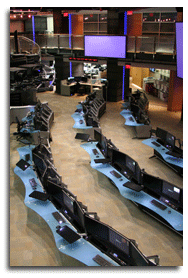 • Manage a Joint Operations Center to provide unique insight and situational awareness of developing terrorism-related worldwide issues and events.
• Operate a secure website, NCTC CURRENT, which serves as an important dissemination mechanism for terrorism information produced by NCTC and other counterterrorism mission partners. NCTC CURRENT is directly available to a broad audience to include U.S. government partners with an operational focus such as the FBI's Joint Terrorism Task Forces and DOD's combatant commands.
• Support a process led by the Executive Office of the President to improve terrorism information sharing within the Intelligence Community and with the rest of the federal government and beyond.
• Provide an interagency forum and supporting process to link national-level counterterrorism policy to strategic operational objectives and tasks for counterterrorism.
• Develop, integrate, implement, and measure the effectiveness and progress of strategic operational plans for U.S. counterterrorism activity.
• Assign roles and responsibilities to lead Departments or agencies for counterterrorism activities according to strategic operational plans and consistent with applicable laws.
History
At the State of the Union address on 28 January 2003, then President George W. Bush declared, “Tonight I am instructing the leaders of the FBI, Central Intelligence, Homeland Security, and the Department of Defense to develop a Terrorist Threat Integration Center to merge and analyze all threat information in a single location.”
On 1 May 2003, the Terrorist Threat Integration Center (TTIC) opened its doors. Led by its first Director, John Brennan, TTIC filled its ranks with approximately three dozen detailees from across the US Government (USG) and was mandated to integrate CT capabilities and missions across the government.
Prior to the establishment of TTIC, individual Federal departments and agencies (largely CIA and FBI) provided the President their own assessments of the terrorist threat. In effect, the White House was being forced to synthesize Community reporting and draw its own conclusions. This was among the first systemic issues TTIC would be tasked to address and would be critical, given the organization’s need to demonstrate added value. With the stand up of TTIC, information sharing, watchlisting, and situational awareness were beginning to be addressed as USG-wide activities that continue to be critical today.
In August 2004, and at the recommendation of the 9/11 Commission, TTIC was incorporated into the National Counterterrorism Center (NCTC) by Executive Order (EO) 13354, which became the foundation for codifying NCTC’s authorities in the Intelligence Reform and Terrorism Prevention Act (IRTPA) of 2004. Through EO 13354 and subsequently IRTPA, NCTC was given the responsibilities for not only integrating analysis and coordinating information sharing and situational awareness, but also for strategic operational planning in direct support to the President.
In 2005, NCTC’s mission was expanded further as the WMD Commission called for mission management, and NCTC was established as what is now known as the National Intelligence Manager for Counterterrorism (NIM-CT). The attempted bombing of a US airliner on Christmas Day 2009 led to the most recent addition to NCTC’s roles and responsibilities, prioritizing and thoroughly pursuing the threads of terrorism threats.
Today, NCTC produces analysis, maintains the authoritative database of known and suspected terrorists, shares information, and conducts strategic operational planning. NCTC is staffed by more than 1,000 personnel from across the IC, the Federal government, and Federal contractors. Forty percent of NCTC’s workforce represents approximately 20 different departments and agencies—a tribute to the recognition by the intelligence, homeland security, and law enforcement communities of NCTC’s role in protecting the Nation against terrorist threats. The Center plays a vital role in protecting the Homeland and US interests around the world from the threat of terrorism.
Given NCTC’s unique authority to access both domestic and foreign terrorism information, NCTC analysts are singularly positioned within the Intelligence Community (IC) to make independent assessments and judgments, particularly on sensitive issues, unencumbered by the pressures and considerations that accompany the intelligence collection process. For this reason, NCTC analysts are perceived by other USG partners as “honest brokers,” and these analysts are expected and trained to reinforce the strong working relationships and collaboration that NCTC promotes with all its IC CT partners.
 In the aftermath of September 11, 2001, President George W. Bush, by issuing Executive Order 13354, and the Congress of the United States (US), by passing the Intelligence Reform and Terrorism Prevention Act (IRTPA) of 2004, reformed our nation’s intelligence enterprise, with a specific focus on intelligence related to terrorism. These foundational documents define NCTC’s principal roles, missions, and responsibilities.
Mission
Lead the nation’s effort to protect the United States from terrorism by integrating, analyzing, and sharing information to drive whole-of-government action and achieve our national CT objectives.
Vision
Be the nation’s indispensable source of CT expertise in a constantly evolving threat environment by leading a unified, agile, and resilient CT enterprise.
Organization
NCTC is aligned under the Office of the Director of National Intelligence (ODNI). The NCTC Director (D/NCTC) is appointed by the President and confirmed by the Senate. D/NCTC reports to the Director of National Intelligence (DNI) as the NIM-CT and serves as the DNI’s principal adviser on intelligence operations relating to CT. D/NCTC reports directly to the President for CT strategic operational planning activities.
NCTC has four directorates: Directorate of Intelligence, Directorate of Identity Intelligence, Directorate of Strategic Operational Planning, Directorate of Global Partnerships, as well as the National Counterterrorism Operations Center – and two offices – Office of Enterprise Services and Office of Information Technology Services. Findings related to the Office of Legal Counsel, Office of Public Affairs, Office of Legislative Affairs, Protocol, and the Civil Liberties Privacy Office are Shared Services under ODNI, which work together to achieve NCTC’s goal of leading the USG CT community.