






First responders, performing homeland security or law enforcement activities on behalf of a state, local, tribal, or territorial government, can access unclassified CT information through US Government Internet portals. These websites contain intelligence products designed to enhance awareness of terrorism threats, tactics, techniques and procedures intended to help protect yourselves and your jurisdictions against potential terrorist attacks. For more information on how to access NCTC’s unclassified/for official use only CT products, please contact This email address is being protected from spambots. You need JavaScript enabled to view it.. Counterterrorism Guide for Public Safety Personnel
Public safety personnel are often positioned to identify suspicious activity potentially related to terrorism, and in some cases, first responders who have reported this information have helped to disrupt terrorist plans or attacks in the US.
JCAT'S COUNTERTERRORISM GUIDE FOR PUBLIC SAFETY PERSONNEL is designed to assist first responders in:
• RECOGNIZING and REPORTING suspicious activity that may be linked to terrorism, consistent with the Nationwide Suspicious Activity Reporting (SAR) Initiative;
• SPOTTING indicators of mobilization to violence; and,
• RESPONDING and MITIGATING terrorist attacks. Intelligence Guide for First Responders
The Intelligence Guide for First Responders was produced by JCAT to improve information sharing among state, local, tribal, and territorial jurisdictions and the federal government.
This guide:
• Highlights your role and responsibility as a consumer of intelligence information.
• Demonstrates how to handle this information and why it must be protected
• Shows you where to find this information and how to gain access to Internet-based U.S. Government systems.
• Helps you understand and participate in the Nationwide Suspicious Activity Reporting Initiative.
• Provides an overview of the Intelligence Community, the intelligence cycle, and the products available to you.
• Identifies existing federal, state, local, tribal, and territorial partnerships that you can use to carry out your duties and responsibilities.
 Counterterrorism Digest
An UNCLASSIFIED compendium of international and domestic news focusing on CT information. It is produced by NCTC in collaboration with JCAT every Wednesday, and it includes relevant commentary on issues related to terrorism and CT. It is available on Internet-based, US Government information sharing systems.
 Counterterrorism Weekly
A FOR OFFICIAL USE ONLY periodical produced by NCTC in coordination with JCAT that focuses on international terrorism compiled from open source information with relevant commentary. It is posted to Internet-based, US Government information sharing systems.
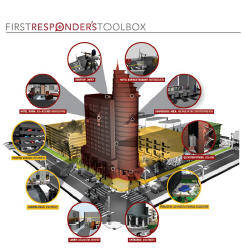
First Responder Toolbox is an ad hoc, Unclassified//For Official Use Only, reference aid intended to promote counterterrorism coordination among federal, state, local, tribal, and territorial government authorities and partnerships with private sector officials in deterring, preventing, disrupting, and responding to terrorist attacks. First Responder Toolboxes are available on DHS’ HSIN.gov, FBI’s LEO.gov, and the Domestic Security Alliance Council’s DSAC.gov.
 Homeland Security Information Network (HSIN)
A national, secure, and trusted web-based portal for information sharing and collaboration among federal, state, local, tribal, territorial, and private-sector partners engaged in the homeland security mission.
• JCAT products are accessible in both the Emergency Services and Intelligence Communities of Interest on HSIN.
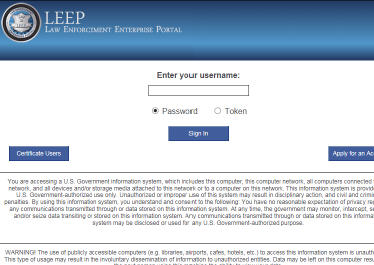 Law Enforcement Enterprise Portal (LEEP)
The Law Enforcement Enterprise Portal (LEEP) is a secure platform for law enforcement agencies, intelligence groups, and criminal justice entities. LEEP provides web-based investigative tools, analytical resources, and networking support allowing users to strengthen case development, collaborate with internal and external agencies, and securely share sensitive documents.
• JCAT products are accessible via JusticeConnect, National Counterterrorism Center (NCTC) – Joint Counterterrorism Assessment Team (JCAT) Community on LEEP.
 Regional Information Sharing Systems (RISS) Officer Safety Website
A secure, information-sharing website for law enforcement, dedicated to providing timely officer safety information and resources.
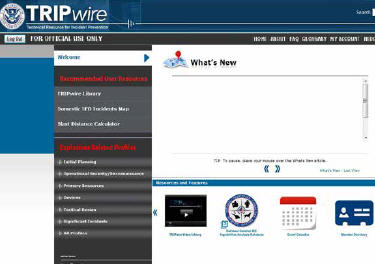 Technical Resource For Incident Prevention (TRIPWIRE)
An information-sharing network designed to increase awareness of evolving improvised explosive device tactics, techniques, and procedures.
Who We Are
The Joint Counterterrorism Assessment Team (JCAT) at the National Counterterrorism Center (NCTC) is where public safety professionals – in law enforcement, emergency medical services, fire service, intelligence, homeland security, emergency management, and public health – are making a difference in the counterterrorism (CT) community by improving information sharing among federal, state, local, tribal, and territorial government agencies and the private sector. JCAT fellows work side-by-side with intelligence analysts from NCTC, the Department of Homeland Security (DHS), and the Federal Bureau of Investigation (FBI) to develop products, conduct outreach and education, and support CT exercises and training.
How Does JCAT Carry Out Its Mission?
JCAT’s mission1 is to improve information sharing and enhance public safety for federal, state, local, tribal, territorial, and private sector (FSLTTP) partners. This is accomplished through three lines of effort:
• Intelligence Production – JCAT reviews CT intelligence and information to facilitate collaborative PRODUCTION on topics intended to address FSLTTP partners’ intelligence needs and requirements; incorporating FSLTTP experience and expertise, to the greatest extent possible, to ensure JCAT products are relevant and useful to counterterrorism partners.
• Outreach and Education – JCAT performs OUTREACH and EDUCATION to build and strengthen FSLTTP partnerships; promote awareness and understanding of partner capabilities and resources; improve information sharing; and recruit JCAT fellows.
• Support – JCAT provides SUPPORT to counterterrorism partners in the planning, delivery, and evaluation of exercises; and the facilitation of training.
1 JCAT’s mission relates to threats from international terrorists and U.S.-based violent extremists directed, enabled, or inspired by, or otherwise affiliating or collaborating with international terrorists, or that concern terrorist tactics, techniques, and procedures that could be employed by such actors. JCAT does not engage in activities addressing threats without an identified foreign nexus.
"At NCTC, we sit in the middle of a Counterterrorism and Homeland Security enterprise that includes the federal government and all of our partners in Washington."
—The Hon. Nicholas J. Rasmussen, Director
The documents below are being released to provide information on NCTC’s use of data. Posting these documents online is consistent with our ongoing transparency initiative—which includes the release of documents to the public as well as a series of privacy and civil liberty symposiums—to enhance our outreach and engagement with advocacy and faith-based groups, national security academics, and other members of the public.
Using Counterterrorism Lessons Learned to Address other Transnational Threats
This paper, written by Russell E. Travers of the National Counterterrorism Center in August 2015, was selected as a finalist in the 2015/2016 Galileo Awards Program. The paper lays out a strategic framework for addressing the most tactical of issues, the challenges posed by transnational bad actors. Galileo is an annual Intelligence-wide competition designed to encourage and recognize innovative workforce ideas that address current challenges and help share the future of U.S. Intelligence.
Terrorist Identities Datamart Environment (TIDE) Fact Sheet - Current as of 30 June 2016
This fact sheet, updated annually, provides a primer on TIDE, the knowledge bank that supports the U.S. Government's terrorist screening systems. Through the Intelligence Reform and Terrorism Prevention Act of 2004, Congress mandated that NCTC establish and manage TIDE.
Memorandum of Understanding between FinCEN and NCTC (redacted)
This Memorandum of Understanding (MOU) governs NCTC's access to the Department of the Treasury's Financial Crimes Enforcement Network (FinCEN) data collected pursuant to the reporting authority contained in the Bank Secrecy Act (BSA). The redacted MOU places restrictions on the NCTC's access and provides protections to the data.
Overview of the Baseline Safeguard Protections Under NCTC’s 2012 Attorney General Guidelines
A White Paper that describes how NCTC has implemented its Attorney General Guidelines-mandated baseline safeguards, as well as the compliance checks/audits of NCTC’s adherence to those safeguards.
Enhanced Safeguards Decision Matrix
The decision matrix used by NCTC in assessing each replicated non-terrorism dataset for potential application of additional, Enhanced Safeguards, over and above the baseline safeguards which are applied to all replicated datasets.
NCTC Compliance Incident Procedures Regarding Data Handling (redacted)
Procedures for reporting, assessing, investigating and resolving compliance incidents relating to NCTC’s handling of data accessed pursuant to various authorities, to include Executive Order 12333 and/or Attorney General-approved Guidelines.
Overview of NCTC’s Data Access as Authorized by the 2012 Attorney General Guidelines
A White Paper detailing the categories of data that NCTC replicates under its Attorney General Guidelines, as well as how this data is used by NCTC to fulfill its counterterrorism mission.
NCTC’s Annual Report on the Access, Retention, Use and Dissemination of United States Person Information For the Period March 23, 2012 through March 31, 2013 (redacted)
NCTC’s first annual report to the ODNI General Counsel and Civil Liberties Protection Officer, as well as the IC Inspector General, on NCTC’s access, retention, use and dissemination of non-terrorism datasets, as required under NCTC’s revised 2012 Attorney General Guidelines.
Memorandum of Agreement Between the Department of Homeland Security and the National Counterterrorism Center Regarding Advance Passenger Information System Data (redacted)
The MOA which allows NCTC to gain bulk access to DHS APIS Data, for up to 1 year, which incorporates detailed restrictions on who can access the data and for what purpose, pre-requisite training, processes for ensuring data is up to date, error correction and feedback, independent auditing by DHS, and many other privacy and civil liberties protective provisions.
ODNI White Paper on Civil Liberties and Privacy Protections
A White Paper issued by the ODNI’s Civil Liberties and Privacy Office explaining the civil liberties and privacy protections incorporated into NCTC’s 2012 Attorney General Guidelines.
NCTC Guidelines – Mission Justification Fact Sheet
A short paper explaining NCTC’s counterterrorism mission, as well as the factors that led to revision of NCTC’s Attorney General Guidelines in March 2012.
Historical Reference Documentation
NCTC Attorney General Guidelines
Executive Order 13354 National Counterterrorism Center
Intelligence Reform and Terrorism Prevention Act of 2004
"The center provides a unique environment to optimize the U.S. government's collective knowledge and formidable capabilities to identify and counter the terrorist threat to the nation."
NCTC comprises employees from partner organizations that include: Central Intelligence Agency; Department of Justice/Federal Bureau of Investigation; Departments of State, Defense, and Homeland Security; and other entities that provide unique expertise such as the Departments of Energy, Treasury, Agriculture, Transportation, and Health and Human Services; Nuclear Regulatory Commission; and the U.S. Capitol Police.
The NCTC also maintains productive relationships with foreign partners. It is the diversity of backgrounds and disciplines fused together in an integrated environment that enriches the NCTC analysis, provides alternative perspectives, and breaks down cultural and physical barriers.