





NCSC Awareness Materials
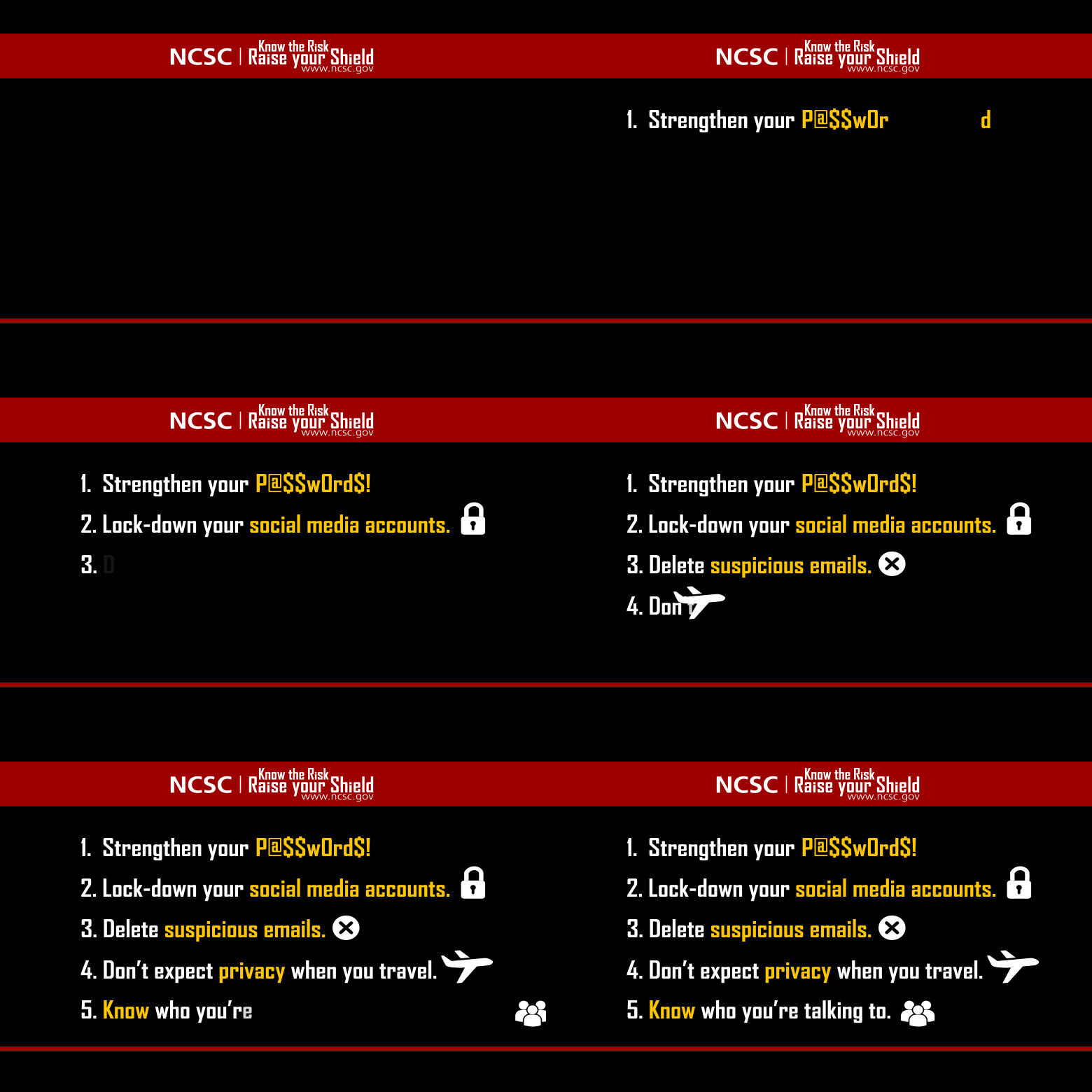
Foreign intelligence entities, which may include foreign governments, corporations, and their proxies, are actively targeting information, assets, and technologies that are vital to both U.S. national security and our global competitiveness. Increasingly, U.S. companies are in the cross-hairs of these foreign intelligence entities, which are breaching private computer networks, pilfering American business secrets and innovation, and carrying out other illicit activities. The National Counterintelligence and Security Center is dedicated to raising awareness among government employees and private industry about these foreign intelligence threats, the risks they pose, and the defensive measures necessary for individuals and organizations to safeguard that which has been entrusted to their protection.
The following products will enable personnel to better understand these threats and provide guidance and tips for protecting the sensitive information, assets, technologies, and networks to which employees have access. It will also serve to help them protect their personal, confidential information that may be used by others to gain their trust.
 Videos
- Social Media Deception
- Social Engineering
- Spear phishing 2017
- Spear Phishing (30 second trailer)
- Spear Phishing Full Video
- Social Media Deception Trailer
- Social Media Deception Full Video
- Travel Awareness
- Human Targeting
- Supply Chain Risk Management
- Economic Espionage
 Print Materials
Posters
- CFIT Poster Human Targeting
- CFIT Poster Social Media Deception
- CFIT Poster Spear Phishing
- CFIT Poster Travel Awareness
- CFIT Poster Social Engineering
- Social Media Deception Poster
- Human Targeting Poster
- Travel Awarenes Poster
- Spear Phishing Poster
- Social Engineering Poster
- Espionage Poster 1
- Espionage Poster 2
- Insider Threats Poster
- Protect America's Competitive Advantage Poster 1
- Protect America's Competitive Advantage Poster 2




Brochures
Flyers
- Social Media Safety
- Digital Foot Print
- Mobile Device Safety
- Spear Phishing and Common Cyber Attacks
- Counterintelligence Tips Safe Travels Counterintelligence Tips Safe Travels
 Other Government Products
- Internet Social Networking Risks
- Best Practices for Keeping your Home Network Secure
- DoD’s Identity Awareness Protection and Management Guide March 2021
- DoD's Consumer Privacy and Identity Quarterly
- Elicitation Brochure
- Espionage Brochure
- Phishing Brochure
- Recruitment Brochure
- Supply Chain Risk Management, Background Paper: insight into SCRM concepts and NCSC’s mission
- Supply Chain Risk Management, A Framework for Assessing Risk: discussion of supply chain risk and mitigation
 Links & Additional Resources
- Protecting Your Information
- FBI Protected Voices Initiative
- FBI Internet Crime Complaint Center
- Center for Development of Security Excellence
- Department of Homeland Security (DHS)
- Digital.gov
- Federal Trade Commission (FTC) - "Identity Theft"
- On Guard Online
- StaySafeOnline.org
- U.S. Computer Emergency Readiness Team
Travel Tips
Traveling Overseas with Mobile Phones, Laptops, PDAs, and Other Electronic Devices
You Should Know
For general travel alerts and information, see the Department of State Site. http://travel.state.gov/content/passports/en/alertswarnings.html.
- In most countries you have no expectation of privacy in Internet cafes, hotels, offices, or public places. Hotel business centers and phone networks are regularly monitored in many countries. In some countries, hotel rooms are often searched.
- All information you send electronically – by fax machine, personal digital assistant (PDA), computer, or telephone – can be intercepted. Wireless devices are especially vulnerable.
- Security services and criminals can track your movements using your mobile phone or PDA and can turn on the microphone in your device even when you think it’s off. To prevent this, remove the battery.
- Security services and criminals can also insert malicious software into your device through any connection they control. They can also do it wirelessly if your device is enabled for wireless. When you connect to your home server, the “malware” can migrate to your business, agency, or home system, can inventory your system, and can send information back to the security service or potential malicious actor.
- Malware can also be transferred to your device through thumb drives (USB sticks), computer disks, and other “gifts.”
- Transmitting sensitive government, personal, or proprietary information from abroad is therefore risky.
- Corporate and government officials are most at risk, but don’t assume you’re too insignificant to be targeted.
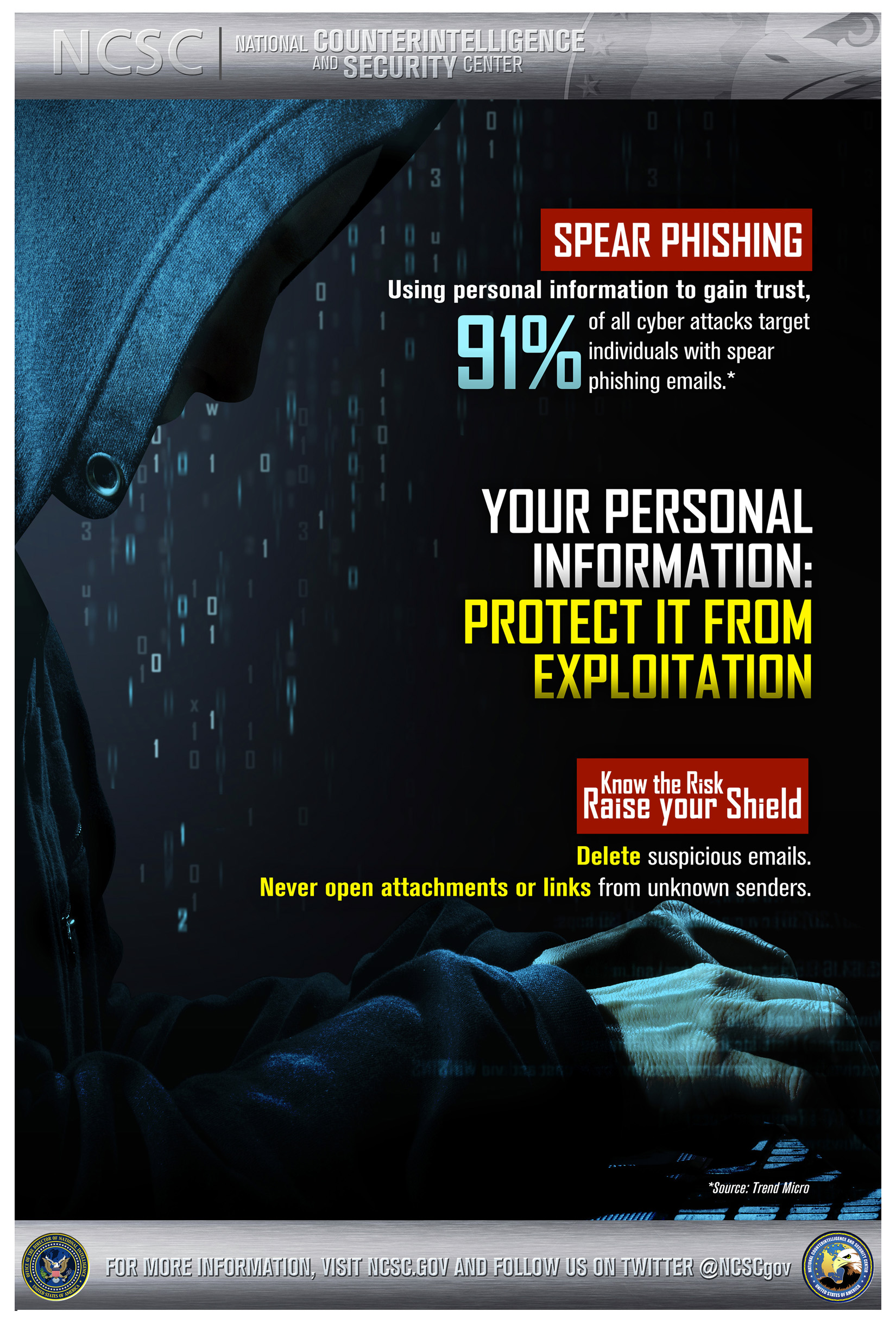
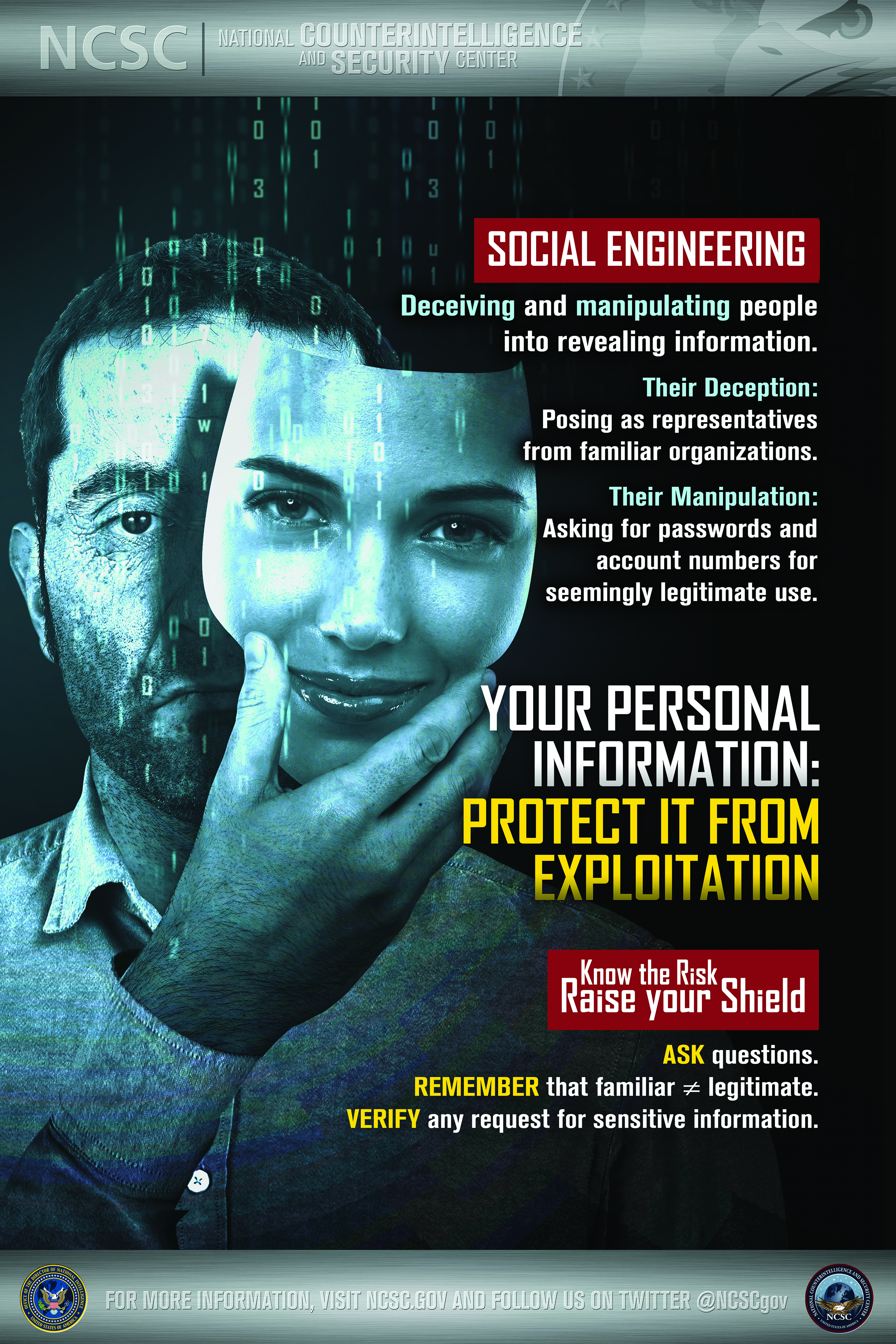
- Foreign security services and criminals are adept at “phishing” – that is, pretending to be someone you trust in order to obtain personal or sensitive information.
- If a customs official demands to examine your device, or if your hotel room is searched while the device is in the room and you’re not, you should assume the device’s hard drive has been copied.
Before You Travel
- If you can do without the device, don’t take it.
- Don’t take information you don’t need, including sensitive contact information. Consider the consequences if your information were stolen by a foreign government or competitor.
- Back up all information you take; leave the backed-up data at home.
- If feasible, use a different mobile phone or PDA from your usual one and remove the battery when not in use. In any case, have the device examined by your agency or company when you return.
- Seek official cyber security alerts from: www.onguardonline.gov and www.us-cert.gov/cas/tips
Prepare your device:
- Create a strong password (numbers, upper and lower case letters, special characters – at least 8 characters long). Never store passwords, phone numbers, or sign-on sequences on any device or in its case.
- Change passwords at regular intervals (and as soon as you return).
- Download current, up-to-date antivirus protection, spyware protection, OS security patches, and a personal firewall.
- Encrypt all sensitive information on the device. (But be warned: In some countries, customs officials may not permit you to enter with encrypted information.)
- Update your web browser with strict security settings.
- Disable infrared ports and features you don’t need.
While You're Away
- Avoid transporting devices in checked baggage.
- Use digital signature and encryption capabilities when possible.
- Don’t leave electronic devices unattended. If you have to stow them, remove the battery and SIM card and keep them with you.
- Don’t use thumb drives given to you – they may be compromised. Don’t use your own thumb drive in a foreign computer for the same reason. If you’re required to do it anyway, assume you’ve been compromised; have your device cleaned as soon as you can.
- Shield passwords from view. Don’t use the “remember me” feature on many websites; re type the password every time.
- Be aware of who’s looking at your screen, especially in public areas.
- Terminate connections when you’re not using them.
- Clear your browser after each use: delete history files, caches, cookies, URL, and temporary internet files.
- Don’t open emails or attachments from unknown sources. Don’t click on links in emails. Empty your “trash” and “recent” folders after every use.
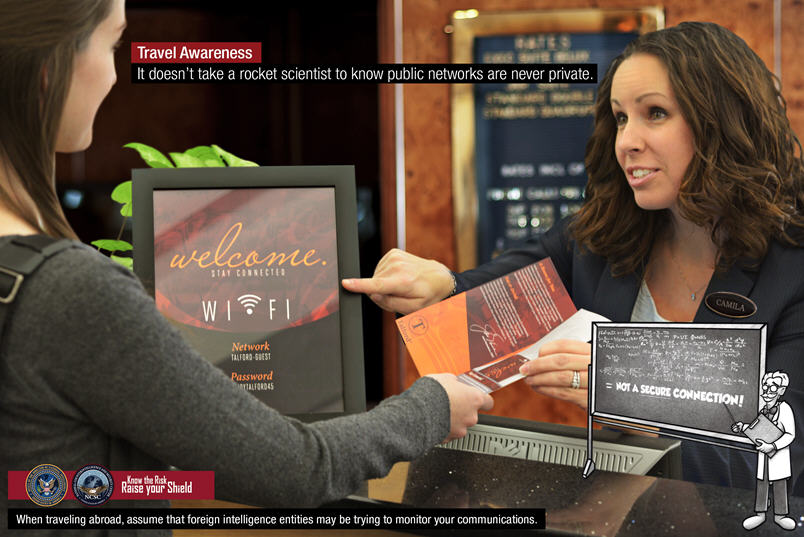
- Avoid Wi-Fi networks if you can. In some countries they’re controlled by security services; in all cases they’re insecure.
- If your device or information is stolen, report it immediately to your home organization and the local US embassy or consulate.
When You Return
- Change your password.
- Have your company or agency examine the device for the presence of malicious software.
Instructor-Led Course Schedule
Please contact This email address is being protected from spambots. You need JavaScript enabled to view it. for the most recent training schedule.
NCSC Videos
The most up-to-date training and awareness films addressing threats such as foreign recruitment of U.S. students, targeting of U.S. industry and corporate executives, Insider Threats, and the advanced technical threats of the 21st Century.

Game of Pawns -- The Glenn Duffie Shriver Story
Based on a true story, Game of Pawns is a call for vigilance to the nearly 260,000 American students studying abroad.
Synopsis:
There is an ancient Chinese proverb: Life is a game of chess, changing with each move. Glenn Duffie Shriver's first big move was the dream of a lifetime: a study abroad year in Shanghai, China. But, his year overseas would, eventually, lead him down a treacherous path. After answering a work-for-hire ad in a online college newspaper, shriver is befriended by three Chinese intelligence officers. What first seems like an innocent offer of friendship and a "free" scholarship ends in a life-altering prison term for conspiracy to commit espionage against the United States.
Produced by the Counterintelligence Division of the FBI in association with the FBI's Washington Field Office and the National Counterintelligence and Security Center, Game of Pawns is a cautionary tale for all students to be vigilant during their time abroad.
(coming soon a Special Features: Excerpts from the prison cell interview with the real Glenn Duffie Shriver.)
Terminal Risk
Terminal Risk -- a video jointly produced by NCSC, NSA, FBI and State/DS-- focuses on the Counterintelligence and security threats faced by the private sector at home and abroad. The ten vignettes were the result of NCSC discussions with industry security officers in the defense, pharmaceutical, entertainment, energy and IT sectors. They reflect real-life threats faced by the U.S. private sector from terrorists, foreign intelligence services and foreign competitors. The video also provides advice on steps private sector firms and their employees can take to counter these threats.
Course Resource Pages
Unauthorized Disclosure Resources
- EO 13526 - Classified National Security Information (2009)
- EO 12333 - United States intelligence activities, as amended (2008)
- National Security Act of 1947, as amended
- ODNI Instruction No. 2007-6
- Title 18, U.S. Code (USC) - Crimes and Criminal Procedure
- Title 50, U.S.C. - War and National Defense Whistleblower Protection Act, Intelligence Community of 1998
- WMD Commission Report
Classification Management Resources
- EO 13526 - Classified National Security Information (2009)
- ISOO Implementing Directive, 32 CFR Part 2001, Classified National Security Information; Final Rule (2010)
- ICD 710 - Classification and Control Markings System (2009)
- CAPCO Authorized Classification and Control Markings Register (Publically Releasable)(2008)
- CAPCO Intelligence Community Classification and Control Markings Implementation Manual (2009)