





Organization
NCTC is aligned under the Office of the Director of National Intelligence (ODNI). The NCTC Director (D/NCTC) is appointed by the President and confirmed by the Senate. D/NCTC reports to the Director of National Intelligence (DNI) as the NIM-CT and serves as the DNI’s principal adviser on intelligence operations relating to CT. D/NCTC reports directly to the President for CT strategic operational planning activities.
NCTC has four directorates: Directorate of Intelligence, Directorate of Identity Intelligence, Directorate of Strategic Operational Planning, Directorate of Global Partnerships, as well as the National Counterterrorism Operations Center – and two offices – Office of Enterprise Services and Office of Information Technology Services. Findings related to the Office of Legal Counsel, Office of Public Affairs, Office of Legislative Affairs, Protocol, and the Civil Liberties Privacy Office are Shared Services under ODNI, which work together to achieve NCTC’s goal of leading the USG CT community.
Dr. Catherine Marsh
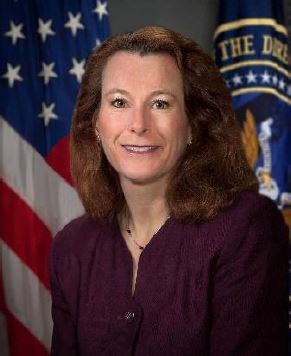 Dr. Catherine Marsh serves as the Director of the Intelligence Advanced Research Projects Activity (IARPA) within ODNI’s Strategy and Engagement Directorate.In her role, she will lead groundbreaking and multi-disciplinary research programs to achievebreakthrough technologies for national intelligence missions.
Prior to this assignment, Dr. Marsh served as the CIA’s Chief Scientist in the Directorate of Science & Technology where she wasresponsible for ensuring that leading-edge science and technology underlies all present and future DS&T and CIA mission capabilities. In addition, she served as the DS&T’sprimary science advisor, providing strategic scientific assessments of all DS&T mission programs.
From 2015-2016 she held the position of Dean of the DS&T’s George Methlie School where she led the DST’s tradecraft educationprogram. From 2013-2015 Dr. Marsh served as the Deputy Director of the Intelligence Advanced Research Projects Activity (IARPA) within the Office of the Director of National Intelligencewhere she was responsible for investing in high-risk/high-payoff research that has the potential of providing our nation with an overwhelming intelligence advantage.
Dr. Marsh is a renowned power sources expert with extensive experience leadingdevelopment teams both in industry and for the government. Dr. Marsh served as the Director of the Power Sources Center in the DST at CIA, where she led a group that provides multi-disciplinary, agile, flexible, and innovative power solutions for the Intelligence Community. In 2001, she joined the CIA as a senior scientist developing power solutions for many systems that support operations. While in industry, she led the team that put lithium-ion technology on numerous platforms, including the MARS Rovers Spirit and Opportunity.
Dr. Marsh is a Director of National Intelligence Fellow and a member of the DS&T’s Distinguished Expert Cadre. She holds B.S. and Ph.D. degrees in inorganic and analytical chemistry from Brown University.
History
Authorized by Congress and established by the Director of National Intelligence (DNI), the Foreign Malign Influence Center (FMIC) began operating on September 23, 2022. FMIC was authorized under 50 U.S.C. §§ 3058, 3059.
The Director of FMIC reports to the DNI and serves as the DNI’s principal advisor on foreign malign influence threats.
FMIC also houses the Election Threats Executive, which was established in 2019 and serves as the IC’s coordinating authority on election security.
FMIC is led and staffed by a diverse team of professionals from across the IC focused on mitigating threats to democracy and U.S. national interests from foreign malign influence.
FMIC serves as the primary U.S government organization for integrating intelligence pertaining to FMI, which entails managing the IC’s collection resources, building partnerships, and advancing strategic analysis, while protecting the privacy and civil liberties of the American people.
FMIC also houses the Election Threats Executive (ETE), which serves as the IC’s coordinating and integrating authority on all election security activities, initiatives, and programs. In this role, FMIC leads the IC’s efforts to identify and assess foreign malign influence and interference in U.S. elections.
Organization
FMIC is composed of three groups:
- Mission Management
- Partner Engagement
- Analytic Integration
FMIC works closely with the National Intelligence Council, the National Intelligence Management Council, and our partners across the Intelligence Community.